For Appoinment (Mon to Sat) :: 022 35920777 | 8779711303   | Morning : By Appoinment Only   | Evening : 5 pm to 9 pm
Email Us : [email protected]

Patient Education

What is Cataract :

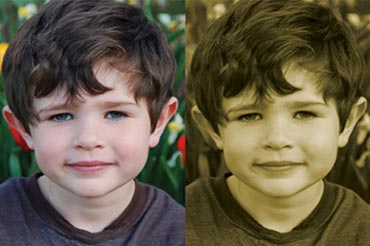
A cataract is when your eye's natural lens becomes cloudy. Things look blurry, hazy or less colorful with a cataract. It is like looking through a foggy or dusty car windshield

Here are some vision changes you may notice if you have a cataract:

  • Having blurry vision
  • Seeing double or a ghosted image out of the eye with cataract
  • Being extra sensitive to light (especially with oncoming headlights at night)
  • Having trouble seeing well at night, or needing more light when you read
  • Seeing bright colors as faded or yellow instead

Cataracts can be removed only with surgery.

If your cataract symptoms are not bothering you very much, you don’t have to remove a cataract. You might just need a new eyeglass prescription to help you see better. You should consider surgery when cataracts keep you from doing things you want or need to do.

How does cataract surgery work?

During cataract surgery, your eye surgeon will remove your eye’s cloudy natural lens. Then he or she will replace it with an artificial lens. This new lens is called an intraocular lens (or IOL). When you decide to have cataract surgery, your doctor will talk with you about IOLs and how they work.

People who have had cataract surgery may have their vision become hazy again years later. This is usually because the eye’s capsule has become cloudy. The capsule is the part of your eye that holds the IOL in place. Your ophthalmologist can use a laser to open the cloudy capsule and restore clear vision. This is called a capsulotomy. Cataracts are a very common reason people lose vision, but they can be treated. You and your ophthalmologist should discuss your cataract symptoms. Together you can decide whether you are ready for cataract surgery.

How Long Does It Take To Recover From Cataract Surgery?

Days or weeks after surgery:

  • You may have to use eye drops after surgery. Be sure to follow your doctor’s directions for using these drops.
  • Avoid getting soap or water directly in the eye.
  • Do not rub or press on your eye. Your ophthalmologist may ask you to weareyeglasses or a shield to protect your eye.
  • You will need to wear a protective eye shield when you sleep.
  • Your ophthalmologist will talk with you about how active you can be soon after surgery. He or she will tell you when you can safely exercise, drive or do other activities again.

What is Diabetic eye disease?

In the early stages, there may be no symptoms of diabetic retinopathy and the condition may go unnoticed. If symptoms are present, they may include:

  • “Floaters” or shapes that float in the visual field
  • Difficulty seeing in dim light or at night
  • Blurred vision
  • Sudden loss of vision

What is diabetic Retinopathy?

In the early stages, there may be no symptoms of diabetic retinopathy and the condition may go unnoticed. If symptoms are present, they may include:

  • People with diabetes can have an eye disease called diabetic retinopathy. This is when high blood sugar levels cause damage to blood vessels in the retina. These blood vessels can swell and leak. Or they can close, stopping blood from passing through. Sometimes abnormal new blood vessels grow on the retina. All of these changes can steal your vision.

Symptoms of diabetic retinopathy

In the early stages, there may be no symptoms of diabetic retinopathy and the condition may go unnoticed. If symptoms are present, they may include:

  • “Floaters” or shapes that float in the visual field
  • Difficulty seeing in dim light or at night
  • Blurred vision
  • Sudden loss of vision

Diagnosis, screening and treatment

Treatment for retinopathy depends largely on the stage of the condition. In the early stages, stringent control of blood sugar levels is one of the best ways to treat the condition. In more advanced cases, laser of the retina, intravitreal Injections ,Surgery in advance cases ,may be recommended.

What is Glaucoma?

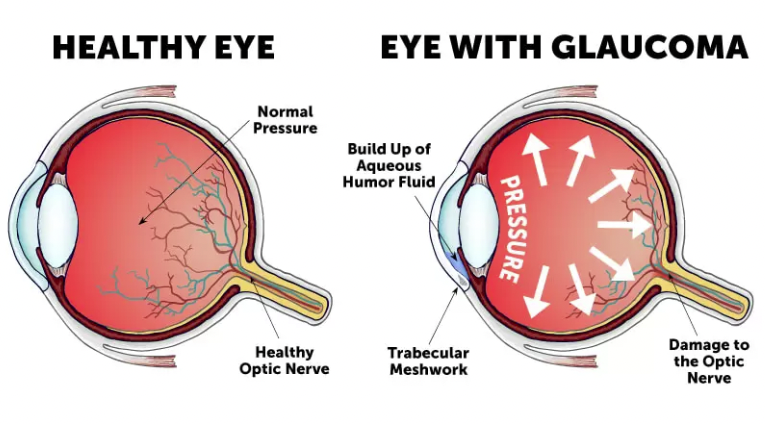
Glaucoma is an eye disease that gradually steals your vision due to damage to the optic nerve. Usually glaucoma has no symptoms in its early stages. Without proper treatment, Glaucoma can lead to blindness. The good news is that with regular eye exams, early detection and treatment, you can preserve your sight.

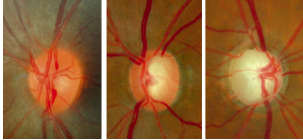
Normal optic disc (extreme left) Glaucomatous optic disc(middle and extreme right photo)

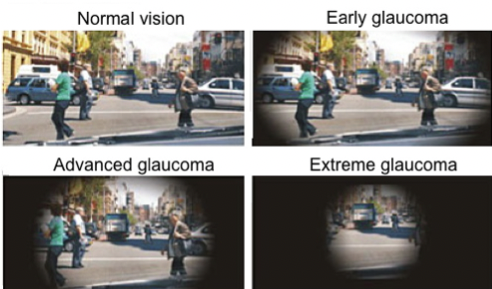
How does glaucoma look?

Vision in glaucoma

Those at high risk to develop glaucoma include people who:
Have increased eye pressure
Family history of glaucoma
Have high blood pressure
Use steroid medication
Have had an eye injury
Over 40 years of age
Near sighted or far sighted

Glaucoma runs in families

If any of your blood relative have glaucoma ,then you may be at increased risk of getting it .get your self checked immediately if any of your blood relatives have glaucoma

In open angle glaucoma ,buildup of fluid pressure happens very slowly. Most people who have open angle glaucoma feel fine and do not notice a change in their vision.that is why regular eye exams are important. In acute angle closure glaucoma ,rise in intraocular pressure is very quickly.
In less common kinds of glaucoma symptoms can be more severe like :
Hazy vision
The appearance of rainbow coloured circles around bright lights
Eye and head pain
Nausea and vomiting
Sudden sight loss

It is important to have your eyes checked regularly.
If you are above the age of 40 get your eyes checked atleast once in a yaer and atleast once in 2 years if you are below 40.

Early diagnosis and proper treatment can control glaucoma
Sight loss from glaucoma cannot be reversed
Glaucoma requires ongoing care
Keep your eye pressure under control
Follow your treatment carefully
Regular checkups are required even after surgery and medication .